What Makes an AI Sales Call Sound Human
Learn what makes an AI sales call sound human, from natural turn-taking and context retention to callbacks, qualification, and live transfer.
August 10, 2026
Why Voice Quality Alone Is No Longer Enough
The believable part of an AI call is the conversation, not the accent.
Speech quality has improved to the point where a synthetic voice can sound natural and easy to listen to. In a Twilio survey of 4,800 consumers and 457 business leaders across 15 countries, 85% of consumers said they had interacted with an AI agent in the previous three months, while 63% of organizations surveyed had conversational AI in the final or complete stages of development.
On the phone, a natural voice is becoming a baseline rather than a differentiator.
What separates a good AI call from an awkward one is how the system behaves while the voice is talking: whether it waits its turn, follows what the person actually said, and recovers when the call goes sideways. Those behaviors, not the audio alone, are the harder part to build. They are also what make a call feel human.
The Behaviors That Make a Call Feel Natural
A call feels natural when the mechanics of a real conversation are in place. A few matter more than the rest:
- Response latency. Long gaps after the person stops talking feel robotic. The reply has to land within the rhythm of a normal conversation.
- Turn-taking and interruptions. People talk over each other. A natural system stops when interrupted, listens, and picks the thread back up instead of continuing through its script.
- Pacing and pauses. Real speech varies in pace and includes natural pauses. Flat, uninterrupted delivery is one of the clearer signs that a conversation is automated.
- Pronunciation. Names, streets, products, and industry terminology must be pronounced correctly for the caller to remain credible.
- Language switching. Supporting multiple languages allows the system to continue a conversation in the lead’s preferred supported language.
- Context retention. The system has to remember what was already said so the lead is not asked to repeat information.
Some of these behaviors can be configured in practice. Structurely’s standard Call AI Agent can interpret and switch a live call between English, Spanish, and French. Teams can also establish pronunciation rules for words the AI tends to get wrong.
One thing that should never be part of sounding natural is hiding that the caller is AI. A responsible system is transparent about what it is. Structurely’s calling setup includes configurable AI identification and recording disclosures.
Sounding human is about making the interaction easier for the lead, not disguising the technology.
What Happens When the Conversation Goes Off Script
Most real calls leave the script early.
Someone gives half an answer, asks a question back, changes the subject, or says something the system did not anticipate. How the AI handles that moment is where natural and robotic experiences begin to separate.
The important behaviors are judgment calls: recovering from an incomplete or unexpected answer, asking a clarifying question instead of guessing, and recognizing the limits of the Agent’s role.
A well-built Agent knows when to continue, when to stop, when to schedule, and when to route the person to a human. A voice that can only read its lines in sequence stalls as soon as the conversation stops cooperating.
Why Cadence, Callbacks, and Cross-Channel Context Matter
Sounding human on a call only matters if the call happens at all, and many leads do not connect on the first attempt. This is the operational layer beneath the voice, and it is where opportunities can quietly be won or lost.
A capable system coordinates the full cadence around the call, including voicemail handling, short-term and longer-term callbacks, and follow-up across calling, texting, and email. The objective is to keep outreach moving without treating every interaction as a new conversation.
The calling number matters, too. Structurely provisions local phone numbers and can follow up by calling from the same number previously used to text the lead. That consistency can make the outreach more recognizable than a call from an unfamiliar number.
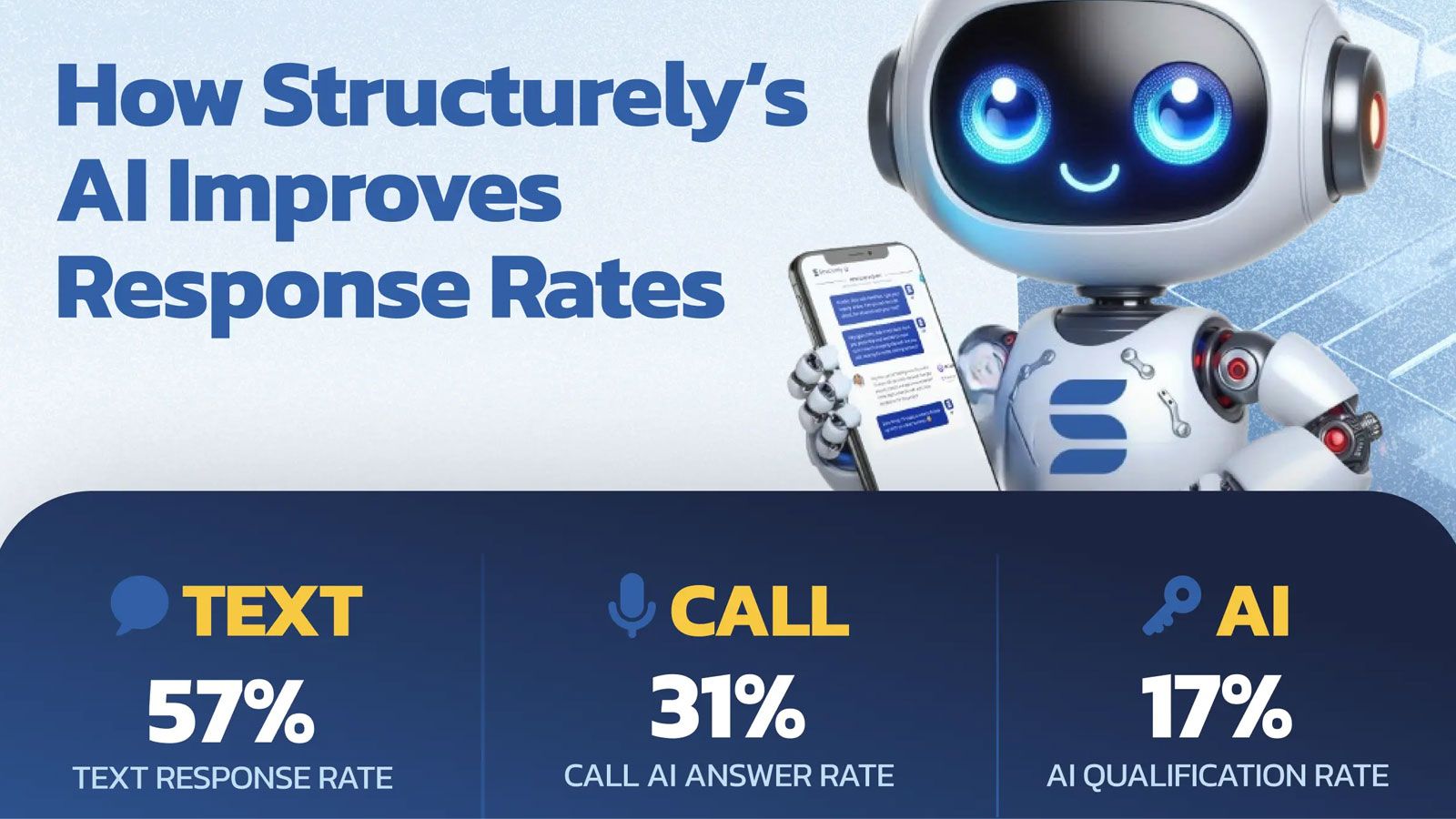
Across its combined AI messaging and calling approach, which includes persistent follow-up and local numbers, Structurely reports a 31% higher answer rate.
Cadence also comes with rules. Responsible outbound outreach is not around-the-clock dialing. Stronger systems handle first touch and sustained follow-up while aligning activity with applicable calling hours and campaign rules. That is a compliance discipline as much as a product setting.
When AI Should Transfer to a Person
The purpose of AI on a sales call is not to remove the person from the process. It is to handle repetitive front-end work, including first touch, qualifying questions, and sustained follow-up, before connecting a ready lead with a person.
The transfer moment is the real test.
A good Agent qualifies the lead, recognizes when someone should take over, and routes the call cleanly. Structurely supports real-time live transfer of qualified leads to the sales team, allowing the handoff to happen while the lead is still engaged rather than after a callback gap.
For the person on the other end, the goal is simple: reach the right person at the right moment, not another dead end.
What Sales Teams Should Evaluate in an AI Calling System
Voice quality is easy to judge in a demo. The rest is more difficult to see, yet it is what determines how the system performs in real outreach workflows.
When evaluating AI calling systems, sales teams should push beyond the audio and ask:
- Does it handle interruptions and unexpected answers, or only follow a fixed path?
- Can it coordinate voicemails, callbacks, and follow-up across calling, texting, and email?
- Does it use recognizable local numbers to support answer rates?
- Is it transparent about being AI, with identification and recording disclosures?
- Can it qualify a lead and transfer the call to a person at the right moment?
- Does outreach respect applicable calling hours and campaign rules?
- Can pronunciation, language, qualification, and call behavior be tuned over time?
A convincing voice is the entry fee now, not the edge. The stronger systems are the ones that get these mechanics right underneath the voice.
Structurely is built around that system-level approach: human-like AI voice Agents for inbound and outbound qualification, local-number calling coordinated with texting and email, configurable pronunciation and language switching, disclosure controls, and live transfer to a person when the lead is ready.
Book a demo or enter your number for a live demo call to hear Structurely’s Voice AI for yourself.